
Mathematics anxiety, achievement, and gender among secondary school students in Kota Kinabalu, Sabah
##plugins.themes.bootstrap3.article.sidebar##
##plugins.themes.bootstrap3.article.main##
Abstract
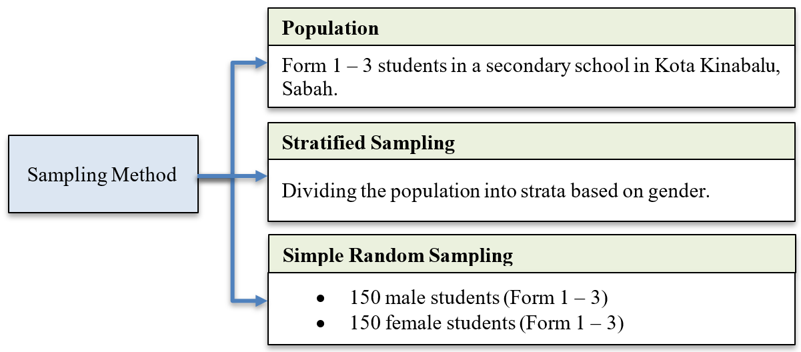
High levels of mathematics anxiety are known to negatively affect students’ learning and academic performance; however, empirical evidence within the Malaysian context particularly among secondary school students in Sabah remains limited. Drawing on prior literature that often reports higher anxiety among female students and a negative relationship between anxiety and achievement, this quantitative study aimed to assess mathematics anxiety levels, examine gender differences, and investigate its relationship with students’ mathematics achievement. A total of 300 lower secondary students from a secondary school in Kota Kinabalu, Sabah participated in the study, and data were collected using a modified Mathematics Anxiety Scale (MAS) questionnaire, while mathematics achievement was measured based on students’ school-based mathematics examination scores. The findings indicated that the overall level of mathematics anxiety was moderate (μ = 3.04, 2.33 < μ < 3.67), suggesting that although anxiety is not at a critical level, it may still hinder optimal performance and confidence in learning mathematics. An independent samples t-test revealed that female students reported slightly higher mathematics anxiety (M = 3.11, SD = 0.07) compared to male students (M = 2.97, SD = 0.06); however, the difference was not statistically significant (p = 0.135, p > 0.05), indicating that gender is not a determining factor. In contrast, a significant difference in mathematics anxiety was found based on students’ mathematics achievement (F(5,294), p < 0.05), suggesting that anxiety levels vary meaningfully across achievement groups. These findings imply that even moderate levels of mathematics anxiety warrant attention, as they may still affect students’ academic outcomes; therefore, teachers should implement supportive instructional strategies and foster a positive learning environment to reduce anxiety and enhance students’ engagement and performance in mathematics.
##plugins.themes.bootstrap3.article.details##

This work is licensed under a Creative Commons Attribution-ShareAlike 4.0 International License.
The author is responsible for acquiring the permission(s) to reproduce any copyrighted figures, tables, data, or text that are being used in the submitted paper. Authors should note that text quotations of more than 250 words from a published or copyrighted work will require grant of permission from the original publisher to reprint. The written permission letter(s) must be submitted together with the manuscript.References
Abd Karim, A. H., Hajar, M. S. N., & Tunku Ahmad, T. B. (2023). Prevalence of math anxiety among upper secondary students at a private school in Suburban Kuala Lumpur. Jurnal Pendidikan Sains dan Matemaitk Malaysia, 13(1), 52–63. https://doi.org/10.37134/jpsmm.vol13.1.5.2023
Ahmed, W., Minnaert, A., Kuyper, H., & van der Werf, G. (2012). Reciprocal relationships between math self-concept and math anxiety. Learning and Individual Differences, 22(3), 385–389. https://doi.org/10.1016/j.lindif.2011.12.004
Al-Shannaq, M. M. M., & Leppavirta, J. (2020). Comparing math anxiety of scientific facilities students as related to achievement, and some variables. International Journal of Instruction, 13(1), 341–352. https://doi.org/10.29333/iji.2020.13123a
Amam, A., Darhim, D., Fatimah, S., & Noto, M. S. (2019). Math anxiety performance of the 8th grade students of junior high school. Journal of Physics: Conference Series, 1157(1), 042099. https://doi.org/10.1088/1742-6596/1157/4/042099
Asomah, R. K., Kwabena, J. M., Assamah, G., & Manu, H. N. (2025). The influence of gender differences in mathematics anxiety on mathematics performance. International Journal of Educational Innovation and Research, 4(1), 16–33.
Asri, D. N., Setyosari, P., Hitipeuw, I., & Chusniyah, T. (2017). The academic procrastination in junior high school students’ mathematics learning: A qualitative study. International Education Studies, 10(9), 70–77. https://doi.org/10.5539/ies.v10n9p70
Azizah, S. N., & Suhendra, S. (2020). Mathematics anxiety of senior high school students based on extrovert and introvert personality types. Journal of Physics: Conference Series, 1521(3), 032047. https://doi.org/10.1088/1742-6596/1521/3/032047
Bandura, A. (1986). Social foundations of thought and action. Prentice-Hall.
Barroso, C., Ganley, C. M., McGraw, A. L., Geer, E. A., Hart, S. A., & Daucourt, M. C. (2021). A meta-analysis of the relation between math anxiety and math achievement. Psychological bulletin, 147(2), 134–168. https://doi.org/10.1037/bul0000307
Best, J. W., & Kahn, J. V. (2006). Research in education (10th ed.). Allyn & Bacon.
Ching Peng, C., & Rosli, R. (2021). Kebimbangan matematik dan hubungannya dengan pencapaian pelajar tingkatan satu [Mathematics anxiety and its relationship with the achievement of form one students]. Malaysian Journal of Social Sciences and Humanities (MJSSH), 6(3), 30–40. https://doi.org/10.47405/mjssh.v6i3.679
Cohen, J. (1992). A power primer. Psychological bulletin, 112(1), 155–159. https://doi.org/10.1037/0033-2909.112.1.155
Cumhur, M., & Tezer, M. (2019). Anxiety about mathematics among university students: A multi-dimensional study in the 21st century. Cypriot Journal of Educational Sciences, 14(2), 222–231. https://doi.org/10.18844/cjes.v14i2.4217
Cvencek, D., Meltzoff, A. N., & Greenwald, A. G. (2011). Math–gender stereotypes in elementary school children. Child development, 82(3), 766–779. https://doi.org/10.1111/j.1467-8624.2010.01529.x
Department of Statistics Malaysia. (2022). Key findings population and housing census of Malaysia 2020: Urban and rural. Department of Statistics Malaysia. https://www.dosm.gov.my
Diponegoro, A. M., Khalil, I. A., & Prahmana, R. C. I. (2024). When religion meets mathematics: From mathematical anxiety to mathematical well-being for minority group student. Infinity Journal, 13(2), 413–440. https://doi.org/10.22460/infinity.v13i2.p413-440
Dommeyer, C. J., Baum, P., Chapman, K. S., & Hanna, R. W. (2002). Attitudes of business faculty towards two methods of collecting teaching evaluations: Paper vs. online. Assessment & Evaluation in Higher Education, 27(5), 455–462. https://doi.org/10.1080/0260293022000009320
Donolato, E., Toffalini, E., Giofrè, D., Caviola, S., & Mammarella, I. C. (2020). Going beyond mathematics anxiety in primary and middle school students: The role of ego‐resiliency in mathematics. Mind, Brain, and Education, 14(3), 255–266. https://doi.org/10.1111/mbe.12251
Dungdung, P., & Bankira, S. (2023). Mathematics anxiety and academic achievement of secondary school students in relation to gender and medium of school. IOSR Journal of Humanities and Social Science, 28(9), 15–21.
Falk, A., & Fischbacher, U. (2006). A theory of reciprocity. Games and Economic Behavior, 54(2), 293–315. https://doi.org/10.1016/j.geb.2005.03.001
Futane, A. G., & Tech, B. (2021). Sampling technique in research methodology. In W. K. Yadav, G. S. Futane, S. H. S., K. R. Padma, E. Uma, & M. Sudarshan (Eds.), Contemporary multi-disiplinary research trend (pp. 228–251). Nation Press.
Hill, F., Mammarella, I. C., Devine, A., Caviola, S., Passolunghi, M. C., & Szűcs, D. (2016). Maths anxiety in primary and secondary school students: Gender differences, developmental changes and anxiety specificity. Learning and Individual Differences, 48, 45–53. https://doi.org/10.1016/j.lindif.2016.02.006
Ho, H.-Z., Senturk, D., Lam, A. G., Zimmer, J. M., Hong, S., Okamoto, Y., Chiu, S.-Y., Nakazawa, Y., & Wang, C.-P. (2000). The affective and cognitive dimensions of math anxiety: A cross-national study. Journal for Research in Mathematics Education, 31(3), 362–379. https://doi.org/10.2307/749811
Ismail, N., Garba, A., Osman, S., Ibrahim, N. H., & Bunyamin, M. A. H. (2022). Exploring teacher effects on intensifying and minimizing mathematics anxiety among students in Sokoto State, Nigeria. International Journal of Evaluation and Research in Education, 11(1), 161–171.
Jelas, Z. M., Azman, N., Zulnaidi, H., & Ahmad, N. A. (2016). Learning support and academic achievement among Malaysian adolescents: the mediating role of student engagement. Learning Environments Research, 19(2), 221–240. https://doi.org/10.1007/s10984-015-9202-5
Kundu, S. C., & Kar, S. (2018). Mathematics anxiety and its relationship with the achievement of Secondary school students. International Journal of Research and Analytical Reviews, 5(3), 451–455.
Levy, H. E., Fares, L., & Rubinsten, O. (2021). Math anxiety affects females’ vocational interests. Journal of Experimental Child Psychology, 210, 105214. https://doi.org/10.1016/j.jecp.2021.105214
Lindberg, S., Linkersdörfer, J., Ehm, J.-H., Hasselhorn, M., & Lonnemann, J. (2013). Gender differences in children’s math self-concept in the first years of elementary school. Journal of Education and Learning, 2(3), 1–8. https://doi.org/10.5539/jel.v2n3p1
Listiawati, E., Juniati, D., & Ekawati, R. (2025). Understanding mathematics prospective teachers' comprehension of function derivatives based on APOS theory: Insights from low mathematics anxiety levels. Infinity Journal, 14(2), 483–512. https://doi.org/10.22460/infinity.v14i2.p483-512
Maamin, M., Maat, S. M., & Iksan, Z. H. (2021). Analysis of the factors that influence mathematics achievement in the ASEAN countries. Cypriot Journal of Educational Sciences, 16(1), 371–388. https://doi.org/10.18844/cjes.v16i1.5535
Mahmood, S., & Khatoon, T. (2011). Development and validation of the mathematics anxiety scale for secondary and senior secondary school students. British Journal of Arts and Social Sciences, 2(2), 169–179.
Makarova, E., Aeschlimann, B., & Herzog, W. (2019). The gender gap in STEM fields: The impact of the gender stereotype of math and science on secondary students' career aspirations. Frontiers in Education, 4, 00060. https://doi.org/10.3389/feduc.2019.00060
Maloney, E. A., & Beilock, S. L. (2012). Math anxiety: who has it, why it develops, and how to guard against it. Trends in Cognitive Sciences, 16(8), 404–406. https://doi.org/10.1016/j.tics.2012.06.008
Mann, L. C., & Walshaw, M. (2019). Mathematics anxiety in secondary school female students: Issues, influences and implications. New Zealand Journal of Educational Studies, 54(1), 101–120. https://doi.org/10.1007/s40841-019-00126-3
Md-Ali, R., Veloo, A., Suppiah Shanmugam, S. K., Yusoff, Y. a. a. J., & Awang-Hashim, R. (2021). The issues and challenges of mathematics teaching and learning in Malaysia "Orang Asli" primary schools from teachers' perspectives. Malaysian Journal of Learning and Instruction, 18(2), 129–160. https://doi.org/10.32890/mjli2021.18.2.5
Ministry of Education Malaysia. (2020). Malaysia education blueprint 2013–2025: Annual report 2020. Ministry of Education Malaysia.
Mitchell, C. (1984). Mathematics anxiety: what it is and what to do about it. Action Press.
Mohamed, S. H., & Tarmizi, R. A. (2010). Anxiety in mathematics learning among secondary school learners: A comparative study between Tanzania and Malaysia. Procedia - Social and Behavioral Sciences, 8, 498–504. https://doi.org/10.1016/j.sbspro.2010.12.068
Mohammad, S. M. (2017). Tahap kebimbangan matematik dan hubungannya dengan pencapaian pelajar di politektik Muazzam Shah, Pahang [The level of mathematics anxiety and its relationship with student achievement at Muazzam Shah Polytechnic, Pahang]. E-Proceeding National Innovation and Invention Competition Through Exhibition,
Mohammadpour, E., & Yon, H. (2024). Mathematics achievement at rural and urban secondary schools: a trends analysis. Mathematics Education Research Journal, 37(4), 709–742. https://doi.org/10.1007/s13394-024-00511-2
Murphy, D. L. (2018). A phenomenological study of college students in developmental mathematics classes experiences with mathematics and computer anxiety. Liberty University.
Musa, N. H., & Maat, S. M. (2021). Mathematics anxiety: A case study of students’ learning experiences through cognitive, environment and behaviour. International Journal of Academic Research in Business and Social Sciences, 11(3), 932–956.
Nulty, D. D. (2008). The adequacy of response rates to online and paper surveys: what can be done? Assessment & Evaluation in Higher Education, 33(3), 301–314. https://doi.org/10.1080/02602930701293231
OECD. (2013). PISA 2012 results: Ready to Learn (volume III) - Students' engagement, drive and self-beliefs. OECD Publishing. https://doi.org/10.1787/9789264201170-en
Omar, S. H., Syed Aris, S. R., & Teoh, S. H. (2022). Mathematics anxiety and its relationship with mathematics achievement among secondary school students. Asian Journal of University Education, 18(4), 863–878. https://doi.org/10.24191/ajue.v18i4.19992
Pourmoslemi, A., Erfani, N., & Firoozfar, I. (2013). Mathematics anxiety, mathematics performance and gender differences among undergraduate students. International Journal of Scientific and Research Publications, 3(7), 1–6.
Puteh, M., & Khalin, S. Z. (2016). Mathematics anxiety and its relationship with the achievement of secondary students in Malaysia. International Journal of Social Science and Humanity, 6(2), 119–122. https://doi.org/10.7763/ijssh.2016.V6.630
Putnick, D. L., Hahn, C. S., Hendricks, C., Suwalsky, J. T. D., & Bornstein, M. H. (2020). Child, mother, father, and teacher beliefs about child academic competence: Predicting math and reading performance in European American adolescents. Journal of Research on Adolescence, 30(S2), 298–314. https://doi.org/10.1111/jora.12477
Rahmah, M. (2013). Mathematics anxiety among form four sciences students in Kuching secondary schools. Doctoral dissertation. Maktab Perguruan Tun Abdul Razak.
Rasinski, K. A., Visser, P. S., Zagatsky, M., & Rickett, E. M. (2005). Using implicit goal priming to improve the quality of self-report data. Journal of Experimental Social Psychology, 41(3), 321–327. https://doi.org/10.1016/j.jesp.2004.07.001
Seo, E., & Lee, Y.-k. (2021). Stereotype threat in high school classrooms: How it links to teacher mindset climate, mathematics anxiety, and achievement. Journal of Youth and Adolescence, 50(7), 1410–1423. https://doi.org/10.1007/s10964-021-01435-x
Shishigu, A. (2018). Mathematics anxiety and prevention strategy: An attempt to support students and strengthen mathematics education. Mathematics Education Trends and Research(1), 1–11. https://doi.org/10.5899/2018/metr-00096
Siebers, W. M. (2015). Relationship between mathematics anxiety and student achievement of middle school students. Doctoral dissertation. Colorado State University. Retrieved from http://hdl.handle.net/10217/166940
Suren, N., & Kandemir, M. A. (2020). The effects of mathematics anxiety and motivation on students' mathematics achievement. International Journal of Education in Mathematics, Science and Technology, 8(3), 190–218.
Taguinod, D. (2022). Level of mathematics anxiety of bachelor of elementary education freshmen students. International Journal of Arts, Sciences and Education, 3(2), 187–213.
Wang, Z., Lukowski, S. L., Hart, S. A., Lyons, I. M., Thompson, L. A., Kovas, Y., Mazzocco, M. M. M., Plomin, R., & Petrill, S. A. (2015). Is math anxiety always bad for math learning? The role of math motivation. Psychological Science, 26(12), 1863–1876. https://doi.org/10.1177/0956797615602471
Yip, T. (2016). To be or not to be: How ethnic/racial stereotypes influence ethnic/racial disidentification and psychological mood. Cultural Diversity & Ethnic Minority Psychology, 22(1), 38–46. https://doi.org/10.1037/cdp0000046
Zanabazar, A., Deleg, A., Ravdan, M., & Tsogt-erdene, E. (2023). The relationship between mathematics anxiety and mathematical performance among undergraduate students. Jurnal Ilmiah Peuradeun, 11(1), 309–322. https://doi.org/10.26811/peuradeun.v11i1.780
Zhang, J., Zhao, N., & Kong, Q. P. (2019). The relationship between math anxiety and math performance: A meta-analytic investigation. Frontiers in psychology, 10, 01613. https://doi.org/10.3389/fpsyg.2019.01613
Živković, M., Pellizzoni, S., Doz, E., Cuder, A., Mammarella, I., & Passolunghi, M. C. (2023). Math self-efficacy or anxiety? The role of emotional and motivational contribution in math performance. Social Psychology of Education, 26(3), 579–601. https://doi.org/10.1007/s11218-023-09760-8